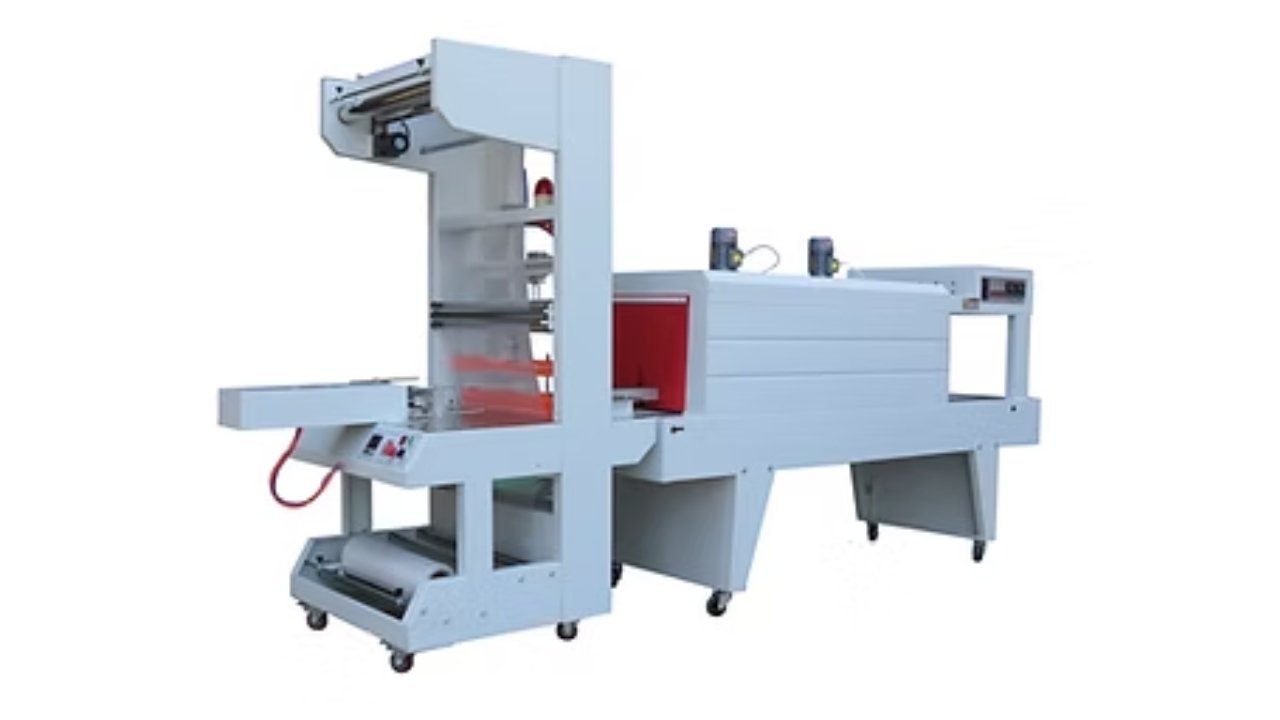
Shrink wrapping machines are vital in the maintenance of your industrial packaging package. The maintenance of shrink wrapping machines will guarantee the production of convenient processes, minimize unnecessary repairs, and maintain the same level of packaging throughout the production lines. Periodic maintenance will also enhance energy conservation and life of your machine.
Why Shrink Wrap Machine Maintenance is Important

Periodic maintenance of industrial packaging machines offers a number of operational and cost-related advantages:
- Avoids the inconvenience of scheduled failure and production failures.
- Also keeps the quality of shrink and seal intact.
- Minimizes the mechanical and electrical failure.
- Increases the life of heating elements and moving parts.
- Enhances thermal performance and efficacy.
- Reduces waste of film and product rework.
- Assures adherence to safety measures.
- Helps to troubleshoot the shrink wrap machine accurately and detect fault in the machine in a timely manner.
Kes Safety Precautions

When it comes to the maintenance of shrink wrapping machines, safety is an important factor. When appropriate safety measures are taken, injuries are avoided, as well as equipment damage and expensive downtime when operating or repairing. Train personnel and enforce stringent safety requirements prior to engaging in maintenance or troubleshooting.
- Always switch off power prior to any maintenance/inspection.
- Let heating elements cool before touching.
- Use thermal protective gloves or eyewear.
- Maintain a clean and clear working place.
- Keep loose clothes or jewelry far away in areas where there is movement.
- Adhere to lockout/tagout requirements of manufacturer.
- Only approved spare parts by the manufacturer should be used.
- Periodically examine wiring and insulation wear and tear.
- Safety guards/interlocks should not be bypassed.
- Train operators train on the emergency stop and shut down.
Common Maintenance Tasks

The following is an in-depth table of Daily Cleaning and Inspection in your shrink wrapping machine maintenance program. Every row describes what, why, and how to do it- helpful with operators, shift leaders and maintenance staff, who need specific, practical checks and to assist in troubleshooting of the shrink wrap machine quickly in the event of problems.
| Task | How to perform (step-by-step) | Why / What to look for (purpose & troubleshooting hints) |
| Exterior wipe-down | Shut down; clean housing and control panel and operator parts with a lint-free cloth and mild cleaner. | Clean dust/film residue to avoid contamination and sensor fouling; provides visual indicator of surface damage or leakage. |
| Film path clean | Open film feed covers; scraps off; clean film rollers and guides with isopropyl alcohol; make sure path is adhesive free. | Eliminates film jams, misfeeds, or wrinkles which result in poor seals and material wastage. |
| Seal bar & jaw inspection | Machine cool off and visual inspection of seal wires, Teflon tapes and any wear or residue on the surface of the welds; change where nicked. | Clean inlet/outlet of tunnel and all lint and debris; examine tunnel conveyor belt roller and any film trapped; examine tunnel door seals. |
| Heat tunnel intake/exhaust check | A clogged airflow results in asymmetrical shrinkage, burnout, or extended pull-down periods; enhances temperature consistency. | Clean up debris; check belt tension and tracking; inspect fraying or damage; re-align tracking, which is off track. |
| Conveyor belt & guides | Misaligned or broken belts cause the uneven movement of products, jams and damage of products. | Roller bearers Clean roller surfaces; Rotate rollers by hand to check roughness; Bearings noise; record any rough bearings to be replaced. |
| Rollers & bearings | Vibratory or rigid bearings are adding more load to the motor, causing vibration and can cause disastrous failures. | Wipe with lens tissue; ensure the sensors operate by passing the test material manually; ensure proper centering. |
| Sensors & photoeyes | Dirty/misaligned sensors result in false stops, missed cycles, and inconsistent indexing – typical troubleshooting object. | Disconnect Power off (when necessary, as specified in SOP) Visual inspection of visible wiring and connectors: discoloration, looseness, burn marks, and panel seals are to be checked. |
| Electrical panel visual | Early faults save shorts, non-operating faults and minimize fire risk – very important in maintenance of industrial packaging machines. | Power machine; check controller readouts, setpoints; monitor tunnel temperatures in warm-up and compare to target. |
| Temperature/display check | Power machine; check controller readouts and setpoints; monitor the temperatures in the tunnel during warm-up and compare to target. | Ensures that heat elements and controllers are in working condition; deviations are signs of old age and control defects. |
| Safety guards & interlocks | Check lock guards; check emergency stop and interlocks to ensure they are operating properly as per SOP. | Guarantees safety of operators and makes sure that machine does not run with open guards – cannot be negotiable in safe operation. |
| Consumables inventory check | Keep left Teflon tape, seal wires, film stock, and spare fuses and replenish when low. | Avoids unexpected failure because of unavailability of minor yet essential items at a shift. |
| Quick functional run | Conduct a trial run (or trial run with sample product) and monitor seals, conveyor motion and tunnel air circulation. | Checks every day before manufacturing; anomalies are detected right away, which minimizes scrap. |
· Checking Heating Elements and Temperature Calibration
Periodically check the heating elements of the sealing system and shrink tunnel to determine whether they have been worn, discoloured, or unevenly heated. Check the temperature distribution within the surface of an element with an infrared thermometer or a thermal imaging device to ensure uniformity. Compare the readings with machine temperature setpoints and recalibrate controller (if deviations are more than +-5 0C ).
· Performing Fabric Inspections on Film Rollers, Belts and Conveyors
Inspect film rollers and conveyor belts to assess residue on films, cracks or misalignment. Wipe with clean rollers and non-abrasive material and they should move freely without any resistance. Check the tension and tracking of the conveyor belt; reposition in case it is shifted to the side.
· Lubricating Moving Parts
Put on manufacturer-advocated lubricants to gears, bearings, and moving linkages on a weekly basis or as suggested by the machine service manual. Excessive lubrication should be avoided as it can draw dust or particles of films. Pay attention to such points of friction like chain drives, pivot arms, and roller shafts.
· Checking Air Supply and Seal Bars
Test the air compressor lines and regulators to see whether there are leaks or an uneven pressure because air-driven seal bars are dependent on the consistent pneumatic systems. Drain water traps and clean air filter to avoid contamination of the moisture. Check the seal bars to ensure they have an equal pressure and change the worn-out Teflon coating or seals.
· The Safety Switches and Sensors Testing
Check photoelectric devices, limit switches and emergency stops before every production run. Test each sensor manually to ensure that the control system is working appropriately. Wipe optical lenses with clean handkerchief and align the sensors.
Troubleshooting Common Problems

· Asymmetrical or Partial Contraction
Although you might be performing usable maintenance of the shrink wrapping machine, problems that may interfere with the quality of the packaging or efficiency of the machine may arise.
· Shrink Wrap not Sealing Properly
Shrink wrap failure to seal, usually due to dirty or damaged seal bars, damaged Teflon tape, or improper temperature settings, is one of the problems. This is normally solved by cleaning the sealing area and recalibration of the temperature.
· Film Tearing or Sticking
In an instance where the shrink film is tearing, the problem might be due to excessive heat in the tunnel, inferior film, or sharp edges of a product. To avoid tearing it is better to lower the temperature of the tunnel or use stronger types of film.
· Uneven Shrink on Packages
Poor airflow in shrink tunnel or imbalanced conveyor speed frequently causes uneven shrink on packages; increasing fan balance or conveyor settings restores uniform shrinkage.
· Sealing Faults or Overheating
Shrink tunnel overheating is typically caused by malfunctioning sensors or obstructed airflow. Vents should be clear and thermostats should be operating properly.
· L-bar Sealer Fails to Cut Film
If L-bar sealer does not cut film, a dull or off-centered sealing wire, or wrong dwell time may be the cause, replacing the wire or re-calibrating dwell time will correct the problem.
· Conveyor Malfunction
A wrinkled or foggy shrink wrap is a common sign of excess heat or tension in the film and hence decreased temperature or tension will result in a clear and smooth shrink wrap.
Misalignment, drive motor issues, or debris accumulation can cause conveyor failures and electrical or temperature control issues can include blown fuses, broken relays, or loose wiring.
· Shrink Wrap Machine Troubleshooting
Correct shrink wrap machine troubleshooting also guarantees uniform sealing operation, energy saving, and packaging.
Professional Training and Servicing

As much as normal in-house services are beneficial, professional servicing will keep your industrial packaging machine in good condition.
Contact a technician in case of consistent sealing, electrical, or temperature problems that cannot be resolved with simple troubleshooting.
Training of operators assists employees to find the early warning indications, adhere to safety procedures, and enhance uptime.
Collaboration with OEM service providers allows availability of original spare parts, calibration skills and the long-term performance reliability through continued technical support.
FAQs

How often should a shrink wrap machine be serviced?
The service intervals can be different, though generally every 3-6 months with the intensity of use and volume of production.
What causes uneven shrink results?
Uneven shrinkage is normally caused by uneven heating, incorrect airflow, or wrong conveyor speed.
Can operators perform basic maintenance without a technician?
Yes, it is possible to clean, inspect, lubricate by the operators, but complicated repair involves certified technicians.
How do I know when to replace seal wires or Teflon tape?
Change them when sealing has become erratic, film sticks, or wires have become visibly damaged.
What’s the best cleaning routine for shrink tunnels?
Clean debris and film residue every day, check heating elements every week and look at fans every month to ensure smooth operation.
Choose Flexshrink, your Experts in Shrink Wrapping Machines

At Flexshrink, we believe regular maintenance of the shrink wrapping machine increases safety, minimizes downtime, and prolongs the lifespan of the equipment.
We encourage our clients to adopt regular inspection, cleaning and professional servicing in good time will provide consistency in the quality of packaging.
It is for this reason that all our machines come with dedicated maintenance instructions. Whether you choose heat shrink tunnel, steam shrink tunnel machine, or L bar shrink wrap machine, you will get a complete manual on how to maintain the machines.
If you are looking for complete turnkey solution for your shrink wrap packaging, Flexshrink is your trusted partner in China.