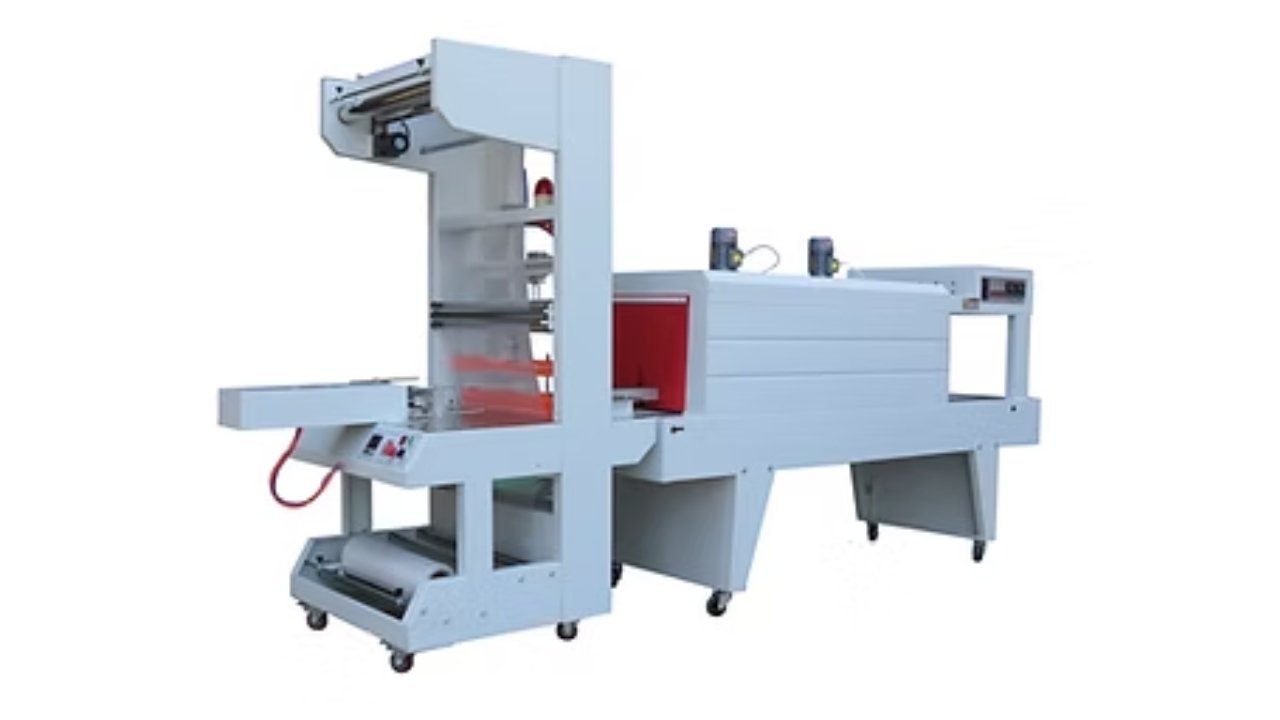
There are many shrink wrap machines available in the market. From L-bar, manual to automatic wrappers – at times it may be difficult to choose the right machine for your shrink wrapping process.
With our years of experience in this industry, and as an experience engineer at Flexshrink, we will take you through critical facts to consider when buying these machines.
What is Shrink Wrap Machine?

A shrink wrap machine is a device used to seal products tightly using a layer of polyethylene that shrinks when heat is applied.
This equipment is a reliable packaging machine in the manufacturing and logistics industries. In food industries it protects goods enhancing preservation.
Factors to Consider before Buying Shrink Wrapping Machine

Understand your Packaging Needs
You must define the product you are wrapping to avoid ending up with a machine that either damages your products or forces you into constant repairs and adjustments.
Put in mind the number of products you need to wrap, the frequency or intervals to avoid a mismatched system that slows you down, overheats, or ruins film.
Size of Items to Package
The size of the item to package determines the entire layout of your shrink wrap machine. They come with maximum sealing widths and tunnel openings.
Your shrink wrap machine should match the product dimensions. Remember to take measurements for every product you plan to wrap, then pick your machine based on the largest item.
Type of Shrink Wrap Film Material
The type of shrink will affect your shrink wrap machines’ sealing quality and compliance with packaging standards.
Consider choosing a good wrapping machine to avoid failed seals, which can make your products look cheap and unprofessional.
Some of the most common materials for shrink packaging include POF, PE and PVC.
| Shrink Wrap Material | Characteristics |
| Polyolefin (POF) | · Common in food and retail industry
· The film wrap is strong, durable and food-safe |
| Polyethylene (PE) | · For heavy items
· Durable and suitable for irregular shapes |
| Polyvinyl Chloride (PVC) | · Common in most retail products
· An affordable film wrapping material known for high gloss and clarity |
Packaging Speed/Volume
This is the most critical factor that you must not ignore. The speed of your machine should match your production volume.
Estimate your current volume of production then select a machine whose rated throughput comfortably exceeds your peak requirement.
Know the Types of Shrink Wrap Machines

L-bar Sealers
This type of shrink machine uses a heated sealing bar to cut and seal shrink film around products in just one motion.
Usually, you will place the product you want to wrap between two layers and your product will be sealed in two directions at once.
Sleeve Wrappers
These are heavy-duty shrink-wrapping machines that wrap large items. After your product is fed to the sealing area, the sleeve wrapper wraps a film sleeve around it, leaving the sides open.
Your item is then pushed through a heat tunnel to shrink the film tightly around the product, creating secure luggage.
Flow Through Wrappers/Automatic Bundling
These types of shrink wrap machines automates the whole process in a continuous flow. They feed products automatically through a conveyor and wrap them in a film sleeve at high speed to achieve high-volume production.
Flow through wrappers give a uniform product sizes and shapes, which means you can set them and run efficiently.
Evaluate Key Features and Specifications

Sealing Mechanism
Impulse Sealers
In this method, nichrome wires or ribbon inside the jaws are used. It only heats when sealing, making it energy efficient and safe. This method is therefore suitable for thinner films like polyvinyl chloride.
Constant Heat Sealer
In this method, bars are kept hot continuously, making it suitable for thicker or laminated films.
Heat Source
Different machines rely on different heating technologies with different heat distribution methods. If your heat source is weak, your output rate will collapse since films may melt or stick.
Construction
Construction quality directly affects seal strength, machine lifespan, and production stability. A good construction system has high-grade extrudes, high-temperature insulation, properly constructed sealing jaws, thicker jaw frames, and wide heat sinks.
Choose machines with heat-resistant steel jaws or reinforced aluminum. Also, remember to check for a thick, replaceable PTFE coating and inspect bar flatness and uniformity.
Safety Features
The machine should be able to cut power instantly when the sealing arm is lifted mid-cycle or stop heating if the temperature spikes beyond the threshold.
Insulated heat bars, protective covers, and heat-resistant guards are necessary to avoid accidental burns.
Your machine should have a hand detecting sensor, a film detection sensor, and obstruction detection sensors. These are important to prevent sealing bars from slamming down on fingers or malfunctioning when film tears
Special Film Requirements

The film you choose will dictate the machine you should buy. Different films melt, shrink, and seal at different temperatures.
Some films need micro-perforation to let air escape during shrinking. Therefore, your machine must match the shrink ratio, directional shrink behavior as shrink orientation requirements.
You need to match your machine design with the film type to avoid alignment issues. Some films need low sealing temperatures while others, like PVC, generate static.
Your machines need to have static eliminators and ionizing bars to avoid poor folding and bad tacking.
Conveyor
Different conveyor types will determine your product stability. They must adjust speed precisely, match tunnel temperature, and synchronize with sealing operations.
Keep in mind that different films shrink at different rates; therefore, always match the right type of conveyor with the right products.
Your conveyor should be able to let hot air circulate evenly around your products.
Peripheral Equipment
The peripheral equipment determines whether your production line is efficient or not.
Your machine must have a proper film unwind system, needle rollers, perforation wheels a proper scrap winder, date coders, and label applicators.
After shrinking, your product will need to cool and stabilize therefore, you need a proper discharge conveyor to improve shape retention.
Industry Standards and Regulations

All manufacturers must provide basic safety compliance. Different countries have different regulations.
In Europe, you need to have a CE certification and provide a declaration of Conformity and a technical file. Machinery Directive 2006/42/EC and (RoHS) Restriction of hazardous substances are mandatory requirements.
ISO 9001 for quality management and ISO 14159 for hygiene requirements, especially in food packaging lines, are compulsory requirements. When buying, also look for products that are ISO 13849, covering machine safety.
In the USA, UL certification for electrical safety is a requirement. FDA compliance for food packaging, OSHA standards, and GMP (Good Manufacturing Practices) are requirements.
Machine Dimensions
Check the total floor space the machine occupies to determine if the machine will fit in your production area. Look at the maximum vertical dimension of the machine for easy accessibility.
The size of the infeed and outfeed conveyor belts or rollers is also important to help in determining the maximum product length that can be wrapped.
Keep in mind that the tunnel width and height must accommodate the largest product size plus clearance for the shrink film to wrap evenly.
Power Requirements
Undersized power causes slow heat recovery, leading to ugly, inconsistent shrink results. Check the voltage and typical power configurations.
Can be a single phase ranging at 220-240V or a three-phase ranging from 380- 440V.The machine should also have a seal bar power to determine seal strength and sealing speed.
Prioritize a machine that has high-wattage heaters with PID control, power air blowers in the tunnels, and a strong seal bar wattage.
Total Cost of Ownership
When choosing a shrink wrap machine, go for a TCO models that include film costs, energy costs, downtime risks and maintenance.
Put to consideration acquisition costs, energy costs, consumables, maintenance and labor costs.
Brand of Shrink Wrap Machine
Not all shrink wrap machines are equal. They vary with spare parts, total cost of ownership and scalability. Choose your preferred machine based on your volume and quality needs.
Make a User Requirement Specification (URS)
Define the minimum technical, performance, safety, and operational requirements for your machine.
Plan for Factory Acceptance Test (FAT)
On your plan for the factory acceptance test, verify that the machine meets ALL specifications in the URS before purchase.
Use actual products and actual film you intend to run to check seal strength, seal clarity and seal alignment on the machines.
FAQs

What are Advantages of Shrink Wrapping?
Protects products from dust, moisture and contamination.
Improves product presentation
Reduces packaging costs
Saves space in storage and transportation
Increases shelf lives
Which Shrink Wrap Film is Food Safe?
Polyolefin (POF) Shrink Film
Polyethylene (PE) Shrink Film
What is the Difference Between Intermittent Motion Shrink Wrap Side Sealers and Continuous Motion Side Sealers?
Intermittent Motion Side Sealers start and stop with every product they are slower, and less efficient, making them fine for small operations.
With continuous motion side sealers, the product keeps moving without stopping at a much higher speed.
What is the Difference Between an L-bar Sealer and a Sleeve Wrapper?
L-bar sealers make a complete 3-side seal around a single item using one piece of film making it best for fully enclosed packages.
Sleeve wrappers create a sleeve around products, leaving the sides open until a heat tunnel shrinks them.
How Much Does Industrial Shrink-Wrapping Machine Cost?
The costs of industrial shrink-wrapping machine vary in pricing. Basic semi-automatic industrial machines are economically affordable with an estimate of USD 8,000.
On the other hand, full industrial grade machines can cost approximately USD 35,000
Why is My Shrink Wrap Wrinkly or not Shrinking Tightly?
Your shrink wrap does not shrink tightly because your heat tunnel temperature is too high or too low. If the air in the tunnel isn’t circulating properly, heat won’t reach the film evenly.
Flexshrink is your Trusted Shrink Wrap Machine Supplier in China

Choosing the right shrink wrap machine comes down to aligning the machine’s capabilities with your actual production reality.
The right choice is the machine that fits your throughput, your product range, and your long-term operating costs, even if the initial price is higher.
At Flexshrink, we strive to make your dream a reality by giving you high quality shrink wrap machines. From manual, semi-automatic to fully automatic machines, our machines are 100% custom-made for your dynamic packaging applications – Download our product catalogue now.